This website was made by Zev Karasik, Ari Bar-Shain, Liam Shamir, and Carmi Rothberg.
  | William Shakespeare Shakespeare
grew up in Stratford upon Avon in
England, where he was born in 1564 and lived until 1616. He was married and had
three children. It is estimated Hamlet was written around 1601, after he
had mostly completed his transition from comedy-writing to tragedy-writing. It
is also highly possible that Shakespeare was influenced by the death of his
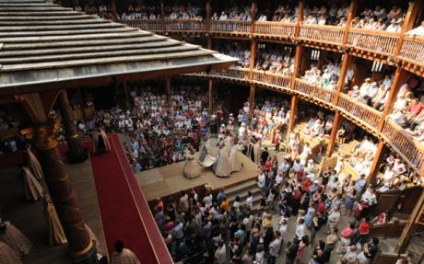
father, which occurred near the time of the play’s writing.Shakespeare’s plays were first performed in the Globe Theater by his playing company, the Lord Chamberlain’s Men. The theater was built in 1599 and could probably hold up to 2300 spectators, although plays were generally attended standing. People during Shakespeare’s time would flock to the theater to see his plays, which were considered greatly entertaining. |
The story of Hamlet, although
tweaked and personalized by Shakespeare, was not initially created by The Bard.
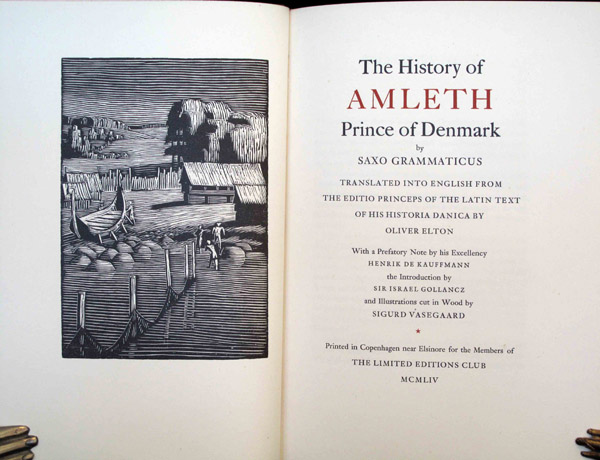
Originally titled The Legend of
Amleth, Hamlet first appears in the twelfth-century Danish History, a
Latin text by Saxo Grammaticus, and was translated into French in 1570, roughly
30 years before the writing of Hamlet. The earlier story was somewhat different
from Shakespeare’s; the version that we read is partly based on the original,
with pieces drawn from later versions and some additions made by Shakespeare
himself. The character of Hamlet, for example, is clearly not a creation of
Shakespeare’s; however, many of the subtle traits that make him such an
intriguing character seem to be unique to the Shakespeare version.
Even Shakespeare’s version of the
play has several editions. Shakespeare’s plays were all originally published in
numerous versions, based on size. Readers could obtain copies of the play as Folios, copies with sheets folded in
half to make four large sides, Quartos,
with sheets folded twice to make four smaller leaves (8 pages) Octavos, with sheets folded four times,
or Duodecimos, with sheets folded to
make twenty four pages. Within the different editions are yet more versions:
the first Quarto, the second Quarto, and so on, resulting in several variations
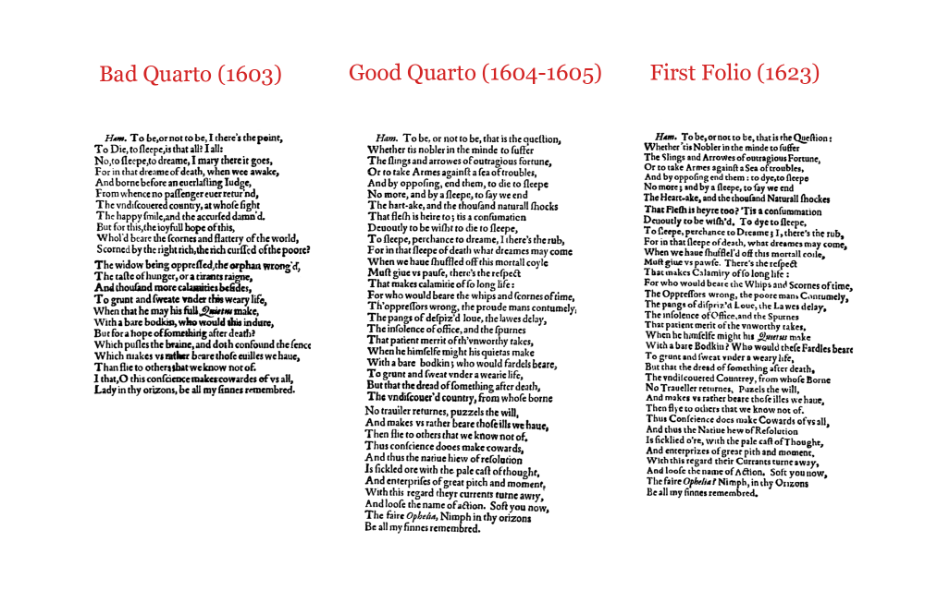
in different copies of the play. These could be very different – compare the
“To Be or Not to Be” soliloquy from the First Quarto and First Folio (the Folio
is the one with which we are more familiar):
“To be or not to be” in the First Folio
To be, or not to be, that is the question:
Whether ‘tis nobler in the mind to suffer
The slings and arrows of outrageous fortune,
Or to take arms against a sea of troubles,
And by opposing, end them. To die, to sleep—
No more, and by a sleep to say we end
The heart-ache and the thousand natural shocks
That flesh is heir to . . .
“To be or not to be” in the First Quarto
To be or not to be, ay there’s the point;
To die, to sleep, is that all? Ay, all.
No, to sleep, to dream; ay marry, there it goes.
For in that dream of death, when we awake
And borne before an everlasting judge,
From whence no passenger ever returned,
The undiscovered country, at whose sight
The happy smile, and the accursed damned . .
The people who attended Shakespeare’s plays were
very different from theater-goers today. It is important to keep in mind
Shakespeare’s audience and the way
that they would react to his writing and the performance. For one thing, they
were accustomed to Elizabethan language, since this is what they spoke in their
everyday lives. Shakespeare often uses high or flowery language, writing in
poetry or making allusions to mythology; however, most of his audience could
understand such language and allusions, since these were part of popular culture at the time. For more
information on Elizabethan language and Shakespeare’s literary technique, see Terms and Literary Elements.
Shakespeare also takes advantage of his audience’s familiarity with, and
probably belief in, the superstitions surrounding ghosts, as well as the
symbolic significance of various flowers. Both of these would help the audience
connect with the drama and plot. Shakespeare’s audience also loved puns and metaphors, especially sexual
ones. Shakespeare incorporates such wordplay often, even in his tragedies, to
satisfy his audience and make his plays enjoyable- after all, his audiences
attended the plays for entertainment
and expected to have a good time.
